

Request A Callback
Have a question or need assistance? Request a callback, and one of our friendly team members will reach out to you as soon.
Have a question or need assistance? Request a callback, and one of our friendly team members will reach out to you as soon.
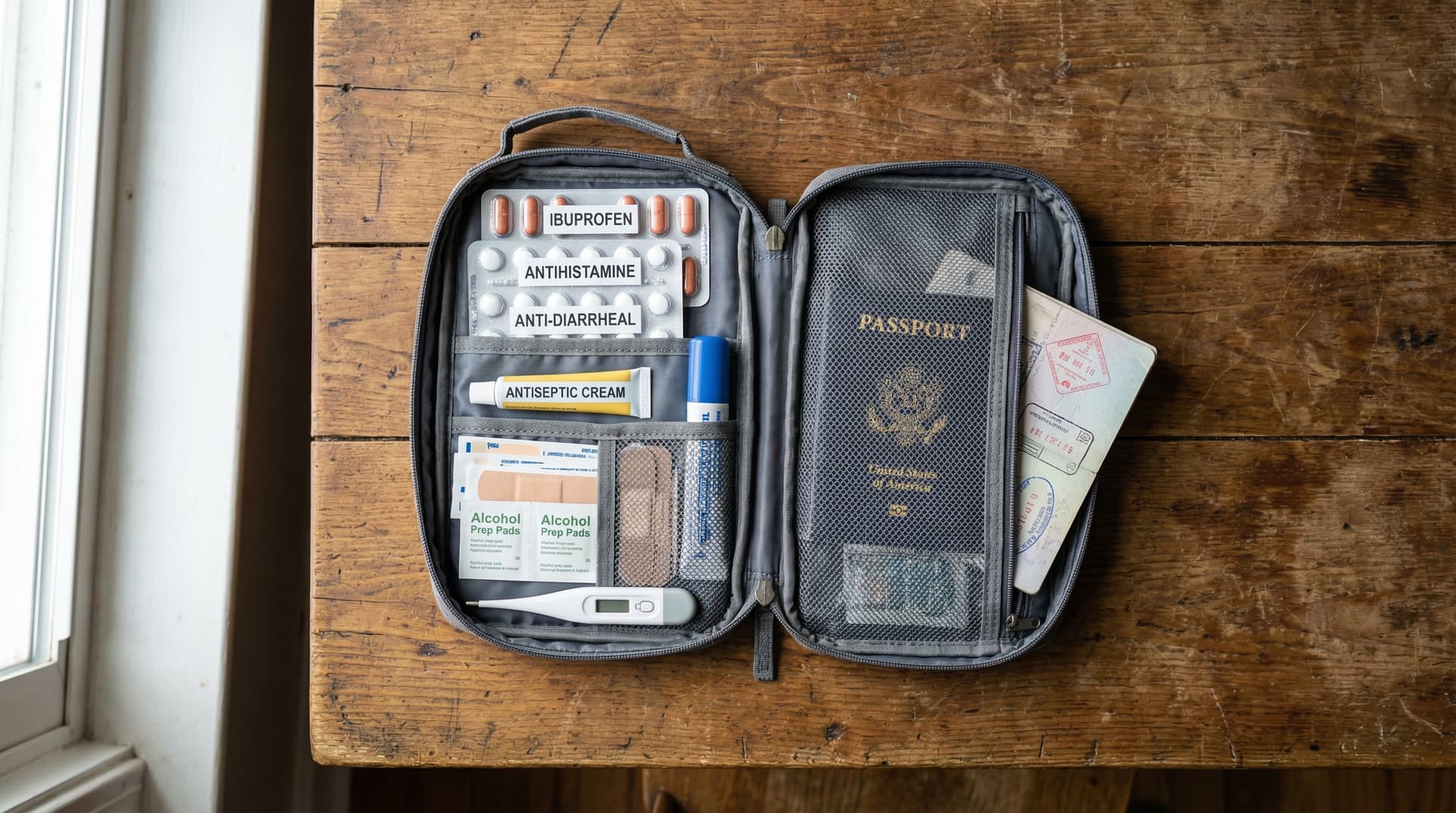
You planned the flights, the hotel, and the fun. But what happens if a migraine hits mid-road trip, your child spikes a fever at midnight, or your blood pressure medicine runs low while you’re away from home?
Most travel health problems are common; they just feel bigger on the road. This travel medical essentials checklist helps you prevent stress, avoid last-minute pharmacy runs, and feel prepared wherever you go.
Packing travel medical essentials isn’t about expecting the worst. It’s about being ready for the usual issues that can ruin a great day.
Travel changes your routine, diet, sleep, and exposure to germs. That can trigger:
Headaches, migraines, and muscle aches
Cold symptoms, allergies, and sinus pressure
Upset stomach, diarrhea, constipation, or nausea
Blisters, small cuts, and minor burns
Dehydration (not enough fluid)
Flare-ups of chronic conditions like asthma, diabetes, or heart disease
When you pack the right travel health kit, you:
Avoid urgent shopping while sick
Reduce the risk of missed doses
Choose safer OTC options (especially if you take prescription meds)
Pharmacist tip: A quick pre-trip pharmacy visit can tailor your kit to your destination, activities, and medical history.
A one-size-fits-all kit doesn’t work for everyone. Your travel medical essentials should match your itinerary.
Domestic travel (USA): Pharmacies are common, but brands and availability vary. You may not want to shop while unwell.
International travel: Planning matters more. Consider adding:
Extra prescription supply in case of delays
Copies of prescriptions with generic names
Oral rehydration packets (diarrhea/dehydration)
A basic thermometer
A pulse oximeter (checks oxygen levels), if you have lung or heart disease
Beach trips
Broad-spectrum sunscreen + aloe gel
After-bite cream
Waterproof bandages
City travel
Hand sanitizer + disinfecting wipes
Blister care for lots of walking
Refillable water bottle
Mountain trips
Lip balm + moisturizer (dry air)
Pain relief for muscle soreness
Motion sickness options for winding roads
Cruises
Motion sickness prevention supplies
Cold/cough relief (close quarters)
Extra refills (pharmacies may be limited onboard)
Request refills 1–2 weeks before departure. If needed, ask about a vacation override (insurance may allow an early refill).
Planning steps:
Count doses for the whole trip plus 3–7 extra days
Confirm the label directions match your current regimen
Check for prior authorization needs before you leave
Always keep prescription medicines in your carry-on, not checked luggage. Delays happen, and cargo holds can be too hot or too cold.
Smart storage tips:
Keep meds in original labeled containers
Use a pill organizer for daily use, but keep a labeled backup bottle
Pack temperature-sensitive meds with a cooler pack if needed
Don’t leave meds in a hot car, even briefly
If you use injectables (like insulin), ask your pharmacist about safe travel storage and documentation.
Bring a printed medication list that includes:
Medicine name, dose, and schedule
Allergies and past reactions
Your pharmacy phone number and prescriber’s office number
Also consider:
Copies of prescriptions (especially controlled medications)
A doctor’s note for syringes, needles, or medical devices
Pack one or two options that your household tolerates well. Ask a pharmacist if you have kidney disease, liver disease, ulcers, or take blood thinners.
Common options:
Acetaminophen (pain/fever)
Ibuprofen or naproxen (inflammation/aches; not ideal for everyone)
Instant cold pack (sprains/swelling)
New environments and dry airplane air can worsen symptoms. Consider:
Non-drowsy antihistamine
Saline nasal spray
Throat lozenges
Basic cough medicine appropriate for age/symptoms
Avoid doubling ingredients: Multi-symptom products often overlap (e.g., multiple medicines with the same decongestant or pain reliever).
Cover different problems with targeted options:
Antacids (heartburn)
Bismuth subsalicylate (mild diarrhea/upset stomach; not for everyone)
Loperamide (when appropriate)
Oral rehydration packets (fluids + electrolytes)
Start prevention early for best results:
Nonprescription motion sickness tablets
Nausea wristbands
Ginger chews or tea for mild nausea
Ask your pharmacist which option is safest if you’re pregnant, older, or taking sedating medications.
Assorted bandages + gauze
Antiseptic wipes
Antibiotic ointment (if appropriate)
Blister pads or moleskin
Small scissors + tweezers
Clean wounds with soap and water when possible; antiseptic wipes help when you can’t.
Insect repellent
After-bite itch relief cream
Sunscreen + lip balm with SPF
Aloe gel or gentle moisturizer
Hydrocortisone cream for mild itching/inflammation (use as directed)
Hand sanitizer (60%+ alcohol)
Disinfecting wipes for high-touch surfaces
Disposable masks if you’re high-risk
Tissues + small trash bag
Children’s dosing depends on age and weight. Bring:
Dosing syringe or cup (not a kitchen spoon)
Children’s pain/fever medicine you’ve used before
Digital thermometer
Oral rehydration solution (vomiting/diarrhea)
Consider adding:
Supportive shoes with a good grip
A night-light for the hotel bathroom
Cane/walker if used at home
Compression socks for long flights (if recommended)
Review medicines that may cause dizziness or low blood pressure (some sleep aids and some blood pressure meds).
Before travel, plan for time zone shifts, meal timing, and activity changes.
Helpful travel medical essentials:
Diabetes: meter, strips, fast sugar tablets, extra supplies
Heart: blood pressure cuff, nitroglycerin (if prescribed), updated med list
Asthma: rescue inhaler, controller inhaler, spacer device if needed
If you use oxygen, CPAP, or injectables, ask about travel-friendly storage and documentation.
Even with the best travel medical essentials, know when to get help, especially for children, older adults, and people with chronic diseases.
Seek urgent care or emergency help for:
Chest pain, severe shortness of breath, or fainting
Stroke signs: face drooping, arm weakness, speech trouble
Severe allergic reaction: swelling of the face/throat, trouble breathing
High fever that doesn’t improve, especially with confusion or stiff neck
Severe dehydration: very dry mouth, no urination, extreme weakness
Uncontrolled bleeding or deep wounds
In the USA, call 911 for emergencies.
Depending on your destination, you may need vaccines or preventive medicines (such as malaria prevention). Your pharmacist can help with:
Routine vaccine updates (flu, tetanus)
Travel vaccines when available or by referral
Insect protection and food safety guidance
Timing for prevention medicines
Prescriptions for the full trip + extra days
Medication list, allergies, and doctor’s notes
OTC pain/fever relief
Allergy/cold symptom support
Stomach care: diarrhea, nausea, hydration
Motion sickness prevention
First aid: bandages, antiseptics, blister care
Sunscreen, insect repellent, itch relief
Hand hygiene supplies
Children’s dosing tools (if needed)
Chronic condition supplies + backup plan
A safer trip starts with smart preparation. When you pack the right travel medical essentials, you protect your health and your vacation time.
Stop by your local pharmacy before you travel. Your pharmacist can review your medications, recommend the right OTC options, and help you build a personalized travel checklist for you and your family.
Start with prescriptions (plus extra days), then add OTC options for pain/fever, allergies/colds, stomach upset, and motion sickness, plus a basic first aid kit.
A common recommendation is 3–7 extra days in case of delays or lost access.
Keep medicines in your carry-on to avoid loss, delays, and temperature damage.
International travel often needs prescription copies with generic names, rehydration packets, and more backup supplies since replacements may be harder to find.